
Venice with kids: what to do, easy itineraries and practical tips
How to visit Venice with babies, young children and older kids: museums, gondolas, vaporetti, rainy days, pushchairs, events and practical tips from Marghera.
Venice works better with children when you stop measuring the day by how many monuments you manage to see. Age, bridges, distances, hunger and tired legs matter just as much as the itinerary: a few well-chosen experiences, boats, open spaces and proper breaks make the city far easier to enjoy as a family.
Build the day around your children’s age
With a baby or preschooler, plan one important visit and leave room for naps, snacks and changes of plan. Older children can usually handle an extra museum or monument, but it still helps to alternate looking, travelling by boat and unstructured time in a campo.
Babies and young children: pushchair, carrier and bridges
You can use a pushchair in Venice, but bridges make heavy models tiring and mean repeated lifting. A lightweight pushchair is useful for breaks; a baby carrier gives more freedom with very young children. For longer stretches, consider a vaporetto to reduce the number of bridges and stop before everyone is already exhausted.
Older children: turn sightseeing into a discovery game
School-age children often respond well when there is something specific to find: animals and specimens at the Natural History Museum, details on façades, working boats, old wells in campi, winged lions or differences between neighbourhoods. A small “mission” is often more engaging than asking them to follow an adult itinerary for hours.
Natural History Museum: one of the easiest family choices
The Museo di Storia Naturale Giancarlo Ligabue, inside the Fontego dei Turchi, offers a very different rhythm from churches and palaces. MUVE also runs family activities during the year; its on-demand family programmes are aimed at children aged 5–14 and require booking subject to availability. Check the official website for current tickets, hours and activities.
Gondola and vaporetto: two very different experiences
A gondola ride can give tired legs a break and show smaller canals from a different angle; check current fares and practical rules in our dedicated guide. The vaporetto is public transport: children may enjoy the ride, but at busy times it is best treated mainly as a practical way to shorten a route.
Campi, green space and a less compressed Venice
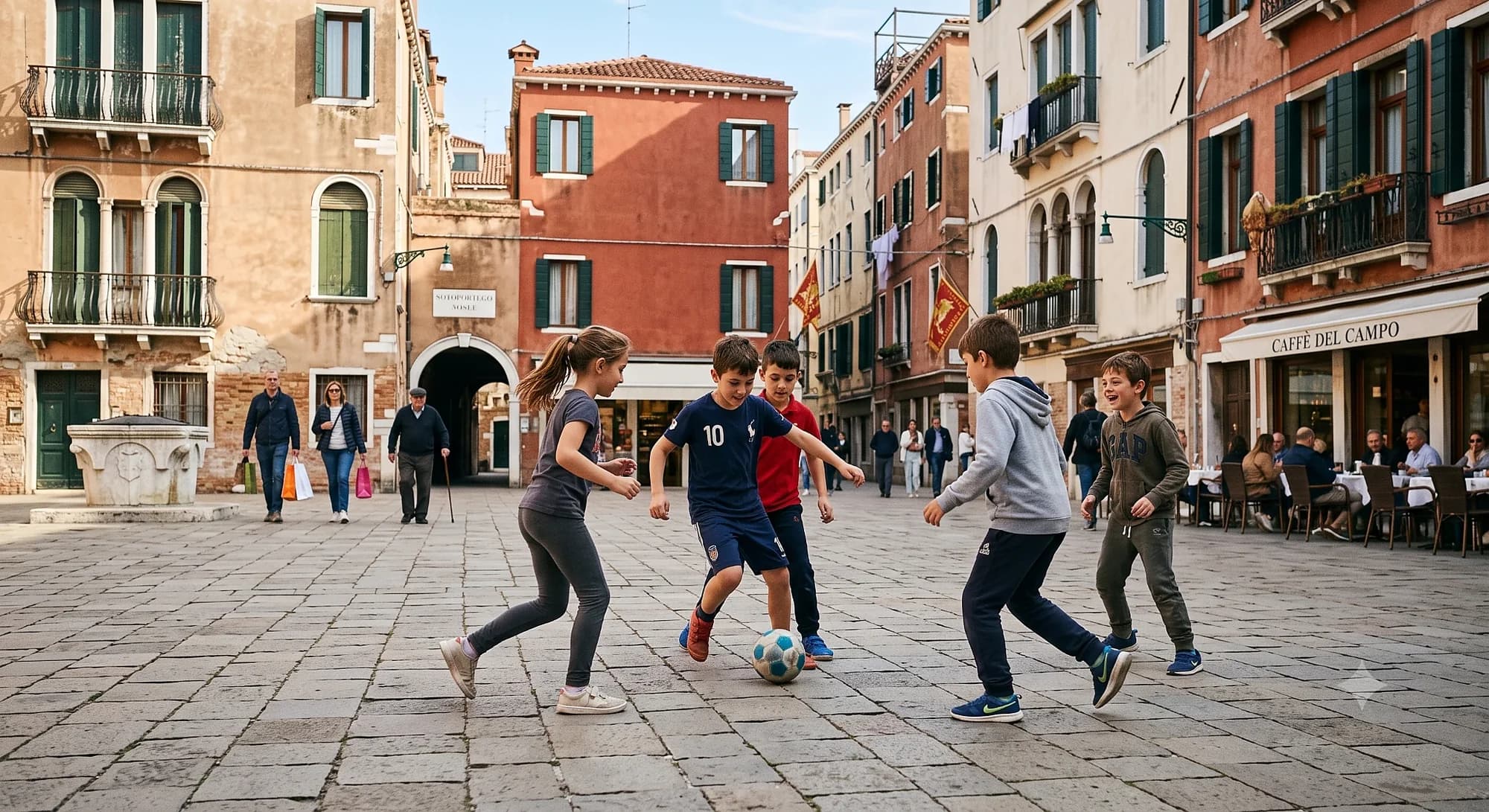
Campo Santa Margherita, Campo San Polo and Campo Santa Maria Formosa are useful places to stop. Cannaregio, Castello and Sant’Elena can support a slower route than the St Mark’s–Rialto axis, while the Giardini and Sant’Elena offer more open space. You do not need a playground at every break: sometimes space to move freely is enough.
When it rains: choose one good indoor stop, not five
A rainy day is easier with a simple plan: one museum suited to the children’s age, a long break and fewer transfers. The Natural History Museum is a concrete option for many families; other MUVE museums also run educational programmes, but ages, activities and availability vary. Check the official programme rather than filling the day with admissions just to stay dry.
Traditions and events families can follow through the year
Some Venetian traditions give children an extra reason to look closely at the city. In autumn, use the current Halloween guide and our San Martino article; in winter, Carnival brings masks, costumes and events across Venice. This guide stays evergreen: dates and programmes live in the dedicated articles, which can be updated for each edition.
Murano, Burano and the Lido when you have more time
The islands are not a quick break: boat journeys take time, so choose them without squeezing the rest of the day. Murano and Burano can work well for children interested in boats, colours and crafts; the Lido offers wider spaces and, in the right season, the beach. They are useful alternatives on a multi-day stay.
From Marghera: leave the car and make the return easier
Staying in Marghera lets you leave the car at the apartment and use public transport into Venice instead of finding parking near the lagoon every day. ACTV also operates night services on the mainland, but times, stops and diversions can change: check the day’s timetable before planning the final part of an evening with tired children.
For families, what happens after Venice matters too
A kitchen and independent living space make breakfast, dinner, naps and downtime easier to manage. Rossi Apartment sleeps up to 7 people, so it can also suit larger families or groups; Dimora Castelli likewise offers a full kitchen and private parking. Use the apartment pages for the latest facilities and conditions.
Marghera Venice Apartments tip
Do not try to “finish Venice” with children. Pick one or two experiences that really suit their age, count bridges as part of the travel time and keep enough margin to change your plan. That flexibility is often what turns a tiring day into a good family day.
Official information
Times, access rules, reservations and transport arrangements can change. Check variable details with the official source before your visit.
Natural History Museum – official MUVE website ↗Stay with MVA
Coming to Venice with children? Stay with us.
Use Marghera as your base: private parking, convenient connections to Venice and two apartments designed to give you more freedom during your stay.